


Social media has become a natural part of staying connected with the people and activities that matter most. Whether you’re keeping up with family, reconnecting with old friends, or exploring new interests, these platforms offer a simple way to stay engaged from day to day. Many older adults are finding that social media adds another layer of connection to an already active lifestyle.
Staying safe online doesn’t require advanced technical skills or constant vigilance. With a few thoughtful habits, you can protect your personal information, recognize potential risks, and enjoy social media with confidence. Knowing what to look for—and what to avoid—helps you focus on meaningful connections while staying in control of your online experience.
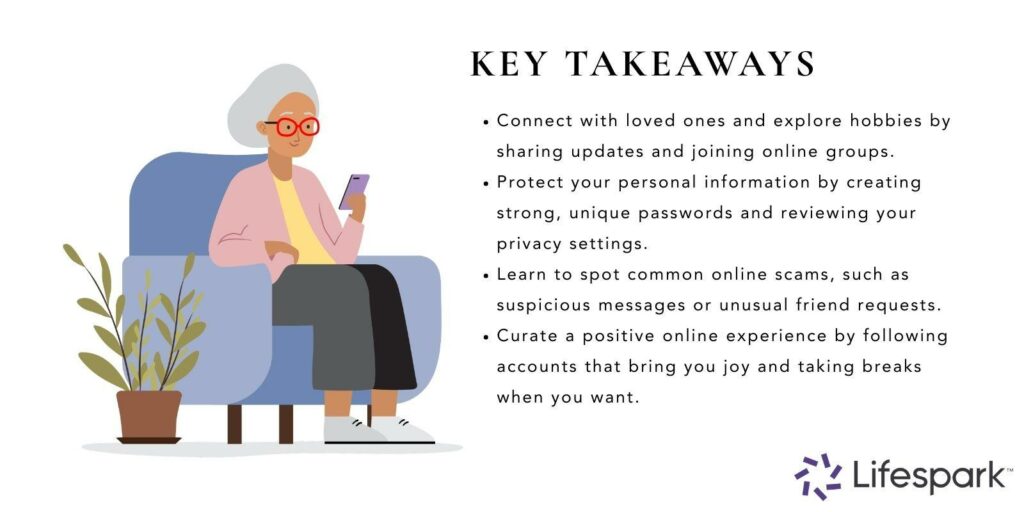
Key Takeaways
- Connect with loved ones and explore hobbies by sharing updates and joining online groups.
- Protect your personal information by creating strong, unique passwords and reviewing your privacy settings.
- Learn to spot common online scams, such as suspicious messages or unusual friend requests.
- Curate a positive online experience by following accounts that bring you joy and taking breaks when you want.
Keep Your Personal Information Private
Protecting your information online starts with a few simple choices that quickly become second nature. Social media platforms give you more control than you might expect, allowing you to decide what you share and who can see it.
Set Strong and Unique Passwords
A strong password acts as the first layer of protection for your account. Instead of relying on simple or repeated passwords, it helps to create something unique for each platform you use. Many people find it easier to remember passwords by building them from a phrase or combining familiar words with numbers and symbols.
Review Your Privacy Settings
Most social media platforms allow you to choose who can see your posts, photos, and personal details. Setting your account to “friends only” is often a comfortable starting point, especially if you prefer to keep your updates within a trusted circle. You can also adjust who can send you requests or view your profile information, giving you more control over your online space.
How to Spot Common Online Scams
Online scams can appear in subtle ways, often blending in with everyday messages or notifications. While they can be frustrating to encounter, most follow recognizable patterns once you know what to look for.
Phishing Messages and Suspicious Links
Phishing messages are designed to get you to click a link or share personal information, often by creating a sense of urgency. These messages might appear to come from a company or service you recognize, but small details—like unusual wording or unfamiliar email addresses—can signal that something isn’t right. If you’re unsure, it’s best to avoid clicking the link and instead go directly to the official website.
Impersonation Scams
In some cases, scammers create messages that look like they’re coming from someone you know. They may ask for help, money, or sensitive information, often with a reason that feels urgent or emotional. Taking a moment to pause and verify the request—such as calling the person directly—can help you confirm whether the message is legitimate.
Fake Prize or Giveaway Scams
Messages claiming you’ve won a prize can be appealing, especially when they seem harmless at first glance. These offers often require you to click a link or provide personal details to “claim” your reward. If you don’t remember entering a contest, it’s a good sign the message isn’t genuine.
Fake Profiles and Friend Requests
Not every profile represents a real person. Some accounts are created with very little information, limited photos, or no shared connections. If something about a profile feels incomplete or unusual, it’s perfectly reasonable to ignore the request and move on.
Urgent or Emotional Requests
Scammers often rely on urgency to prevent you from thinking through a situation. Messages that ask you to act quickly or respond immediately can be a sign that something is off. Giving yourself time to pause and consider the request can help you avoid unnecessary risk.
Be Selective About Who You Connect With
Your social media experience should feel comfortable and familiar, much like the relationships you build in everyday life. While it can be enjoyable to meet new people, it’s just as important to be thoughtful about who you allow into your online circle. Taking a closer look at requests helps you maintain a sense of control and trust.
Review Profiles Before Accepting Requests
Before accepting a new connection, it helps to look at the person’s profile for context. Shared connections, consistent activity, and a complete profile can all signal that the account is genuine. If those elements are missing, it may be worth taking a step back before accepting the request.
Trust Your Instincts
If something about a message or request doesn’t feel right, you don’t need to second-guess yourself. Choosing not to respond or declining a request is always an option. Social media should feel like a safe and comfortable space, and your instincts are often a reliable guide.
The Benefits of Social Media for Older Adults
Social media offers several benefits when it’s used in a way that feels comfortable and balanced. For many older adults, it provides an easy way to stay in touch with loved ones, even when distance makes regular visits more difficult. A simple message or shared photo can help maintain those everyday connections.
Social media can help you:
- Stay connected with family and friends through messages, photos, and updates
- Discover new interests or revisit hobbies through groups and shared content
- Keep your mind active by reading, learning, and participating in discussions
- Feel more connected to daily life, even when spending time at home
Used alongside in-person activities and relationships, social media can be a helpful and enjoyable part of your routine.
Find Your Community at Bluff View Estates Senior Living
Social media is one way to stay connected, but meaningful relationships often grow through shared experiences and everyday interactions. Finding the right balance between online connection and in-person engagement can make a noticeable difference in how connected and supported you feel.
At Bluff View Estates Senior Living, connection is part of daily life, with opportunities to engage, socialize, and build meaningful relationships right outside your door. Whether you’re enjoying community events or simply spending time with neighbors, there are many ways to stay involved and connected. Book a tour with us today, and come discover your new home for yourself.